Sauber to Audi: The Rebrand Chain That Just Hit 7 Identities (And What It Means for 2026)

Formula 1 teams rarely disappear cleanly. They are sold, renamed, repackaged and absorbed, while the factory, entry and technical operation continue beneath the new branding.
In 2026, Sauber becomes Audi’s factory Formula 1 team. On the surface, that looks like a new entry. In historical terms, it is the latest stage of one continuous Hinwil-based constructor : and, according to GridXTrax’s expanded lineage data, the longest F1 rebrand chain yet recorded at seven identities.
Sauber → BMW Sauber → Sauber → Alfa Romeo Sauber → Alfa Romeo Racing → Stake/Kick Sauber → Audi
That sequence compresses more than three decades of ownership changes, commercial partnerships, technical resets and institutional survival. The badge changes. The lineage does not.
The Seven-Identity Chain
One constructor, seven names, several distinct eras.
GridXTrax separates major constructor identities rather than treating every sponsor variation as a new team. That distinction matters.
The chain begins with Sauber’s Formula 1 debut in 1993 and reaches Audi’s factory programme in 2026:
- Sauber : 1993–2005
- BMW Sauber : 2006–2010
- Sauber F1 Team : 2011–2017
- Alfa Romeo Sauber F1 Team : 2018
- Alfa Romeo Racing : 2019–2023
- Stake F1 Team Kick Sauber : 2024–2025
- Audi F1 Team : 2026 onward
The one-year Alfa Romeo Sauber bridge is the detail that pushes the sequence to seven. Without it, the history is often flattened into six broad labels. That is precisely how F1 team histories become misleading.
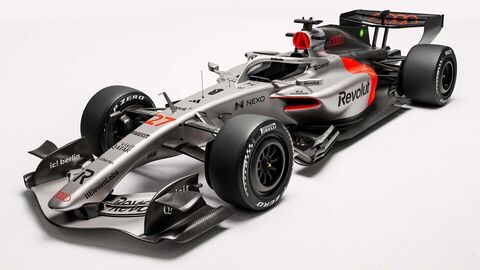
The official 2026 entry is styled Audi Revolut F1 Team, while GridXTrax uses Audi F1 Team as the constructor identity in its lineage record. The difference reflects two separate systems: commercial entry naming and historical constructor continuity.
Swiss Foundations
Peter Sauber’s privateer becomes a permanent F1 institution.
Peter Sauber built racing cars from 1970 and brought his Swiss operation into the World Championship in 1993. The team arrived as a disciplined privateer rather than a grand industrial project, using customer power and engineering efficiency to establish itself in the midfield.
The early years carried several sponsor-linked names : Team Sauber F1, Sauber Mercedes, Red Bull Sauber Ford and Red Bull Sauber Petronas : but the underlying constructor remained Sauber.
That distinction is central to any serious history of F1 teams. Commercial branding can change from season to season; the constructor lineage may remain intact for decades.
Sauber survived through technical credibility, careful management and a factory that became one of the sport’s most valuable independent bases. It also developed drivers who later shaped the wider grid, including Kimi Räikkönen, Felipe Massa and Sergio Pérez.
The privateer era ended when BMW arrived.
The Factory Detour
BMW adds power, resources and a new identity : then leaves.
BMW acquired a majority stake in the operation for 2006, creating BMW Sauber F1 Team. The name preserved Sauber’s origin while signalling BMW’s new works status.
The partnership produced the team’s most successful competitive period. BMW Sauber finished second in the 2007 constructors’ championship, then Robert Kubica won the 2008 Canadian Grand Prix : still the team’s only Formula 1 victory.
BMW withdrew after the 2009 season. The operation remained on the grid under the BMW Sauber designation for 2010, preserving continuity while the ownership structure changed again.
Peter Sauber bought the team back. The manufacturer chapter closed, but the Hinwil constructor survived.
Independence Restored
Sauber returns to its own name and keeps the entry alive.
From 2011 to 2017, the team raced as Sauber F1 Team. It was independent again, but not untouched by the BMW years; the facility, personnel base and technical capability carried forward.
The period delivered podiums for Sergio Pérez and Kamui Kobayashi in 2012, although financial pressure repeatedly threatened the team’s future. Sauber’s survival became less about expansion than continuity.
That is the less glamorous reality behind many F1 team name changes. A rebrand often marks a change in ownership or funding, but it can also represent a team’s attempt to remain on the grid at all.
The next identity would come through a title partnership rather than a full manufacturer takeover.
Alfa Romeo’s Two Steps
The name changes first; the underlying operation changes later.
Alfa Romeo became Sauber’s title partner in 2018, producing the transitional identity Alfa Romeo Sauber F1 Team.
From 2019, the entry became Alfa Romeo Racing. The Alfa Romeo name dominated the branding, but Sauber Motorsport remained the operating force behind the cars, factory and race programme.
This period included Kimi Räikkönen’s return to the team, Antonio Giovinazzi’s full-time F1 campaign and Alfa Romeo’s renewed presence as a constructor marque. It also demonstrated why a database must separate team identity from corporate ownership.
The car could be called Alfa Romeo. The factory was still in Hinwil. The lineage was still Sauber.
Alfa Romeo’s partnership ended after 2023, leaving the team with an interim identity before Audi’s arrival.
The Interim Blackout
Stake and Kick Sauber bridge the gap to the manufacturer era.
The 2024 and 2025 seasons carried the Stake F1 Team Kick Sauber identity. It was a transitional label, commercially loud and historically temporary.
The name reflected title sponsorship and local advertising restrictions, with Kick Sauber used where Stake branding could not appear. Those variations did not create separate constructors. They represented one interim phase in the same Hinwil lineage.
Behind the branding, Audi was preparing its power unit in Neuburg, while Sauber developed the chassis and maintained race operations in Switzerland.
The old identity was already leaving. The new one had not yet arrived.
Audi Arrives
The latest rebrand is also the most consequential.
Audi enters Formula 1 as a factory team in 2026, using the Sauber operation as its established base rather than creating a new constructor from scratch.
The official Audi Formula 1 programme divides the project across three locations:
- Hinwil : chassis development and race operations
- Neuburg : Audi power-unit development and manufacturing
- Bicester : additional technical support
Audi’s 2026 R26 is the first car produced under the new factory identity. The timing is deliberate: the 2026 regulations introduce a new generation of power units, greater electrical contribution and revised chassis priorities.
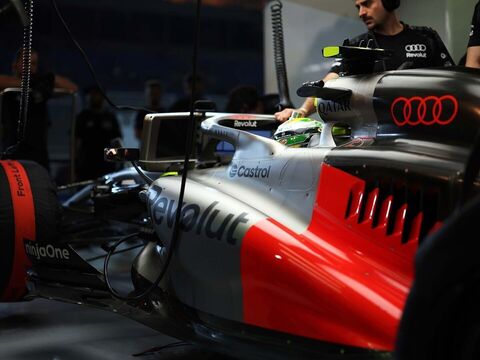
The Formula 1 team profile lists Audi’s base as Hinwil, its chassis as the R26 and its power unit as Audi. Nico Hülkenberg and Gabriel Bortoleto form the debut-season driver pairing.
This is not a new team in the historical sense. Audi has inherited an existing constructor, facility and entry, then supplied them with a new manufacturer identity and powertrain.
The badge is new. The address is not.
Longer Than Enstone
Rebrand count is not the same as age, success or ownership.
The Sauber chain now overtakes the Enstone and Silverstone chains in the number of recorded identities.
The Enstone lineage runs through Toleman, Benetton, Renault, Lotus, Renault again and Alpine. The Silverstone lineage runs through Jordan, Midland, Spyker, Force India, Racing Point and Aston Martin.
Both are older in their F1 origins than Sauber’s 1993 debut. Neither, however, reaches seven identities under GridXTrax’s expanded constructor model once the 2018 Alfa Romeo Sauber transition is counted separately.
That is why a conventional team list is not enough. A list can show who entered a race. It cannot always show which operation continued beneath the name.
What 2026 Changes
Audi gains a works team; Sauber gains a permanent manufacturer structure.
The Audi transition changes three things immediately.
First, the team gains a genuine factory power-unit programme. Sauber spent much of its F1 history dependent on customer engines or partner arrangements. Audi now controls the power unit as well as the commercial identity.
Second, the Hinwil operation enters a new institutional phase. It is no longer an independent team borrowing manufacturer branding, as it was during the Alfa Romeo period. Audi owns and directs the works project.
Third, the historical record becomes harder to read. Future results will appear under Audi, while earlier results belong to Sauber, BMW Sauber, Alfa Romeo and Stake identities within the same continuous lineage.
This is where the F1 team history timeline matters. Without lineage data, Audi appears to begin in 2026. With lineage data, Audi becomes the seventh name attached to a constructor that has been racing in Formula 1 since 1993.
The Archive View
Names change. Continuity is the record.
GridXTrax is the only archive built around the complete dataset for this chain, linking each identity to its seasons, drivers, results and successor. The Sauber team timeline records the competitive history; the interactive lineage graph shows how the identity changes connect; the F1 name-change index places the chain alongside every other renamed constructor.
The result is a clearer historical conclusion.
Audi has not entered Formula 1 from nothing. It has inherited the longest rebrand chain in the sport : a Swiss privateer, a BMW works team, an independent survivor, an Alfa Romeo revival, a short Stake interlude and now a German factory programme.
Seven identities. One continuous line through the grid.